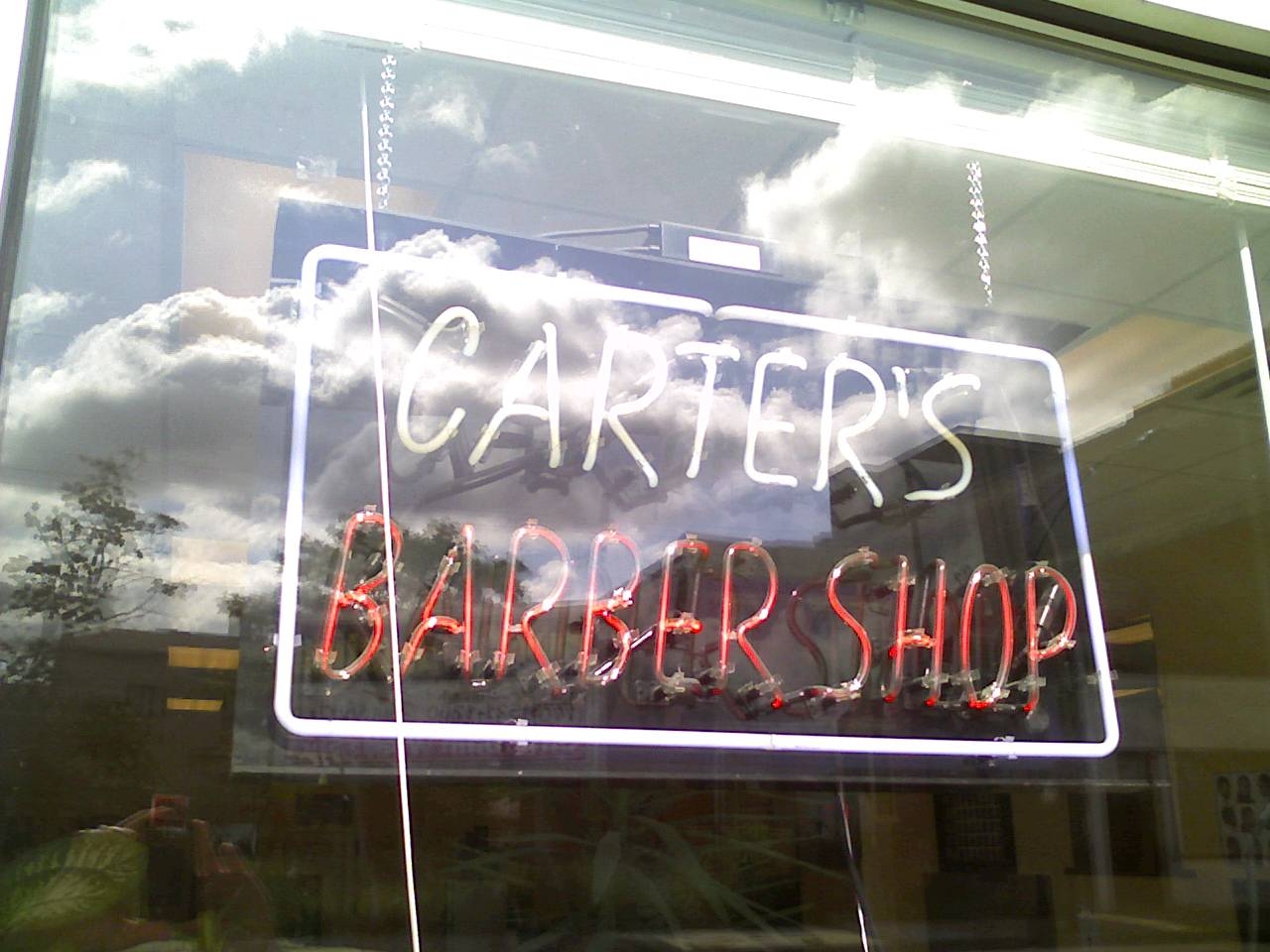
(Bert’s) Barbershop Pt. 1

There have been a lot of changes in my work life since the fall. In October I left my stint as a Host/Producer for Vocalo.org to take a different job, still at Chicago Public Radio. Now I’m doing multimedia production to support our work with various “internal” audiences, like our board of directors and foundation funders. (As opposed to producing content for public consumption in our broadcast or on the web.)  I’m pretty sure it’s a temporary gig, as I want to go back to producing story content asap, but I’m enjoying the work for now.

I’m definitely enjoying my current project. I’m working on a series of video portraits of people who have been dedicated and impressive members of the Vocalo community. I’m trying to get a sense of who these people are, what their lives are like, and explore why they would want to be part of an experimental media community like the one we were trying to build.

I’m starting with Bert Downing, the owner of Carter’s Barbershop in North Lawndale.
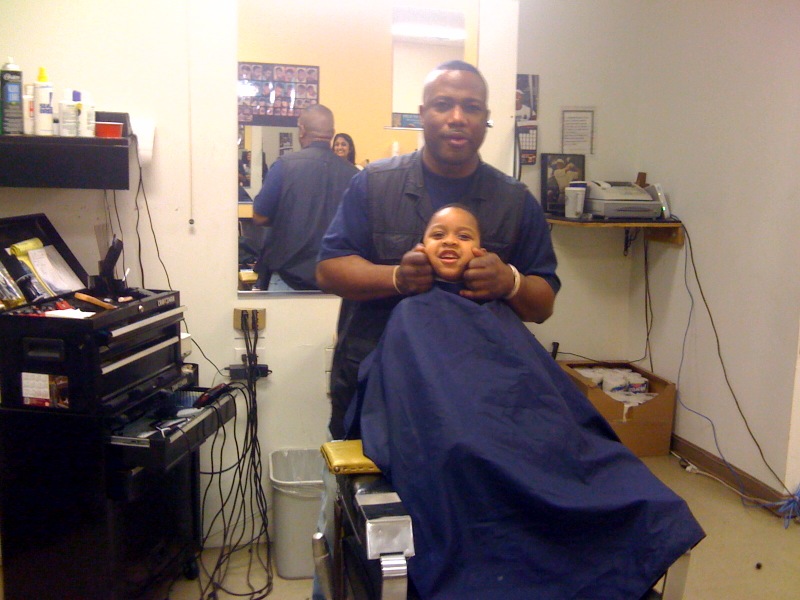
Bert and a really cute kid

North Lawndale is a historically black neighborhood on Chicago’s West Side, and was briefly home to Dr. King when he settled there to launch the northern campaign of the civil rights movement in the late ‘60s. When he was assassinated in 1968, residents of North Lawndale rioted, destroying much of the neighborhood’s business core and physical infrastructure. Common perception is that the neighborhood has never fully recovered from the riots – after the riots is a common refrain among older residents – although there have been efforts to redevelop the neighborhood, attract new businesses, and provide better access to basic services.

A lot of what people will tell you about North Lawndale now are the stereotypes that apply to many urban ghettos (a word I’ve heard several people from North Lawndale use to describe their own neighborhood). Poverty. High rates of incarceration. Unemployment that is two or three times the national average, even when the economy is bad.

But inside the barbershop I’ve seen something different: a strong, functioning community, talking with itself. I guess it’s a cliché that barbershops are where the “real talk” happens, but I’ve seen it and heard it there again and again. And Bert is the conversation impresario, calling his friends and telling them to get down there if they don’t want to miss out on the good talking, excited to turn his barbershop into a radio station for the day.

Here are some clips that came from the various live remote broadcasts we’ve staged at Carter’s Barbershop over the past two years. (We includes fellow producers Dan Weissmann and Luis Perez.) The first is Bert, describing an incident with a customer/cop that went down in the shop some years back.  It’s called Get ‘Em! Or, You Picked the Wrong Barbershop and features probably my favorite Bert-ism of all time.  See if you can guess what it is.

3:17

This second clip comes from another live broadcast, and an interview with a patron named Mr. Heywood. It’s sad and funny at the same time.  When three neighborhood teens drowned at a school retreat after sneaking out paddle boats in the middle of the night, we discussed who was at fault: the adults chaperoning the trip, or the teens themselves. The conversation turned into an in-depth discussion of parenting, with people, including Mr. Heywood,  sharing stories of their own teen misadventures. This piece is called Mr. Heywood Climbs the Tracks. Intro read by Delaney Hall, music by Hauschka and Zoe Keating.

3:42

Finally, here is some raw video of Kastaway from the shoot we did at the barbershop last week. Kastway is AWESOME!! Carter, the original owner of the barbershop, was his mentor, so he basically grew up in the shop. He’s a super talented MC and one of the funniest people I know. I’m really glad to have an excuse to hang out with him again, because he’s really fun to talk to. He’s going to take me around the hood some time next week so I can get some contextualizing footage for the video piece. My favorite part of this video is where he describes Bert as “the uncle I never asked for.” Heehee!

More updates on this project as it progresses!
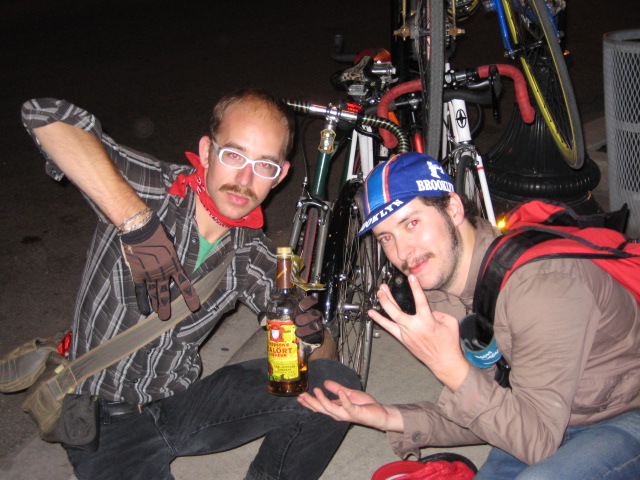
Malort

If you’ve never tried Malort, I don’t know how to recommend it to you. On one hand, if you’ve never had it, you’re missing out on something authentically Chicago. On the other hand, it’s disgusting. It’s a liquor that’s a Chicago tradition, as robust and unique as it is nasty.

When I first moved to Chicago and didn’t really know anyone, my friends Coyote and  Brandon decided they were going to adopt me and show me what this town was all about. High on their list of priorities was introducing me to Malort. This piece is a guide for the uninitiated, and tells the story of my friends’ fond obsession with this two-fisted liquor.

Photo:  Coyote and Skidmore flash the sign for “Midwest” while brandishing a bottle of Malort. Yup. I think this picture about sums it up.

Stephen Redd

I made this sketch in collaboration with my friend and colleague Dan Weissmann, originally for Vocalo.org.  Dan met Stephen Redd in a bar in Chesterton, Indiana.  Stephen was one of those rare people who open up right away. He was frank, boastful, unapologetic about his life choices, and overall a totally memorable character.

These pieces were recorded by Dan, and edited and mixed by Robin.

Stephen imparts some words of wisdom about what you take with you, and what you leave behind. (2:18)

Stephen explains the difference between being a drunk and being an alcoholic, and the difference your uncles can make. (2:56)

Lease these pieces through the Public Radio Exchange (PRX).

Natchez Madam

2:31

This sketch grew out of a “grab bag” project organized by Megan Hall. She asked several producers to submit a short audio clip of their choosing, then gave each of us copies of everyone else’s clips. The resulting pieces were collected and aired on BSR.

The speakers here are actually members of my family – my mother and grandparents – discussing scandalous events that took place long ago in their Mississippi home town. I think of this sketch as my version of “southern gothic.”

Here’s Megan’s version of the grab bag piece, also featuring my grandmother!

Sound Elegies for the Recently Displaced, or, Cartographer’s Amble

Providence vs. Boston

Grace Church illustration

3:27

For a year and a half I lived in the semi-abandoned downtown of Providence, Rhode Island, where one of the most prominent sounds (bar noise and construction aside) was the bells from nearby Grace Episcopal Church. The church has been a fixture in the city for over a hundred years, and I could see its steeple from my bedroom window. Downtown Providence was mostly deserted on the weekends, devoid of noise and pedestrian traffic, but the bells were there, ringing out over the empty streets. I was extremely attached to the bells. Their lonely sound seemed somehow emblematic of the city I loved, with its peculiar quality of having been lost and then found again. During my time in Providence I made field recordings of the bells from inside the 200-foot tall steeple and from outside in the city. I also conducted a few interviews with long time Providence residents about their own associations with the bells.

Then in September of 2005 I moved from Providence to Boston to pursue a career in radio. My sense of loss leaving Providence was palpable. I had loved Providence. It was the city where I had found most of my intellectual and artistic growth, as well as a remarkable community of like-minded creatives in the city’s underground art and music scene. By comparison, Boston seemed sterile and foreign.

Once I left Providence, the recordings of Grace Church took on an entirely new dimension. They became artifacts, sound memories of a place to which I still have deep attachment. Because they evoke such a strong sense of place, hearing the recordings now evokes profound nostalgia.

I had hoped to turn these recordings into a longer piece exploring why I was so attached to Providence, and piecing apart why Boston seemed so different by comparison. This was my first attempt. Working on this piece helped me realize that most of my personal work is about the attachments that people have to the places they live, how people haunt places and places haunt people.

A proposal to fund production of this piece was a finalist for the Berwick Research Institute’s Artist-in-Research Residency Program in 2006.

Note: The above illustration of Grace Church is one panel from a silk-screened comic I made in 2004. Click here if you’d like to see the whole thing.