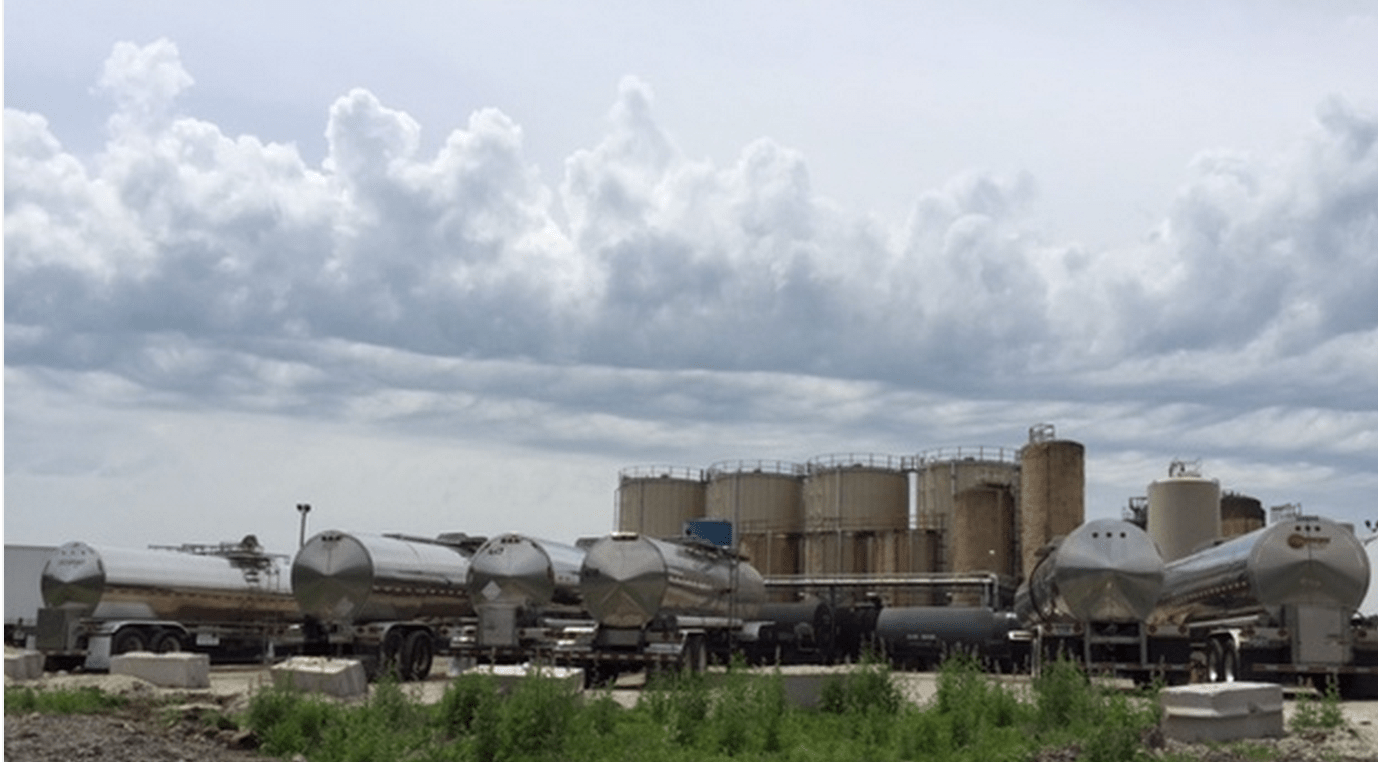
Agri-Fine Corp. produces a component of animal feed at its Southeast Side facility. The state says odors from the factory are making people ill. (Photo by Robin Amer)
I’ve spent much of this summer reporting on Chicago’s Southeast Side for DNAinfo Chicago. The so-called “Forgotten 10th Ward” is home to much of what’s left of the city’s heavy industry, so many of the stories I’ve reported have focused on conflicts between industry and the environment.
Case in point: Agri-Fine Corp. is a family-owned business that manufacturers a component in animal feed. But the plant’s neighbors and the state allege that the company has been emitting noxious fumes from its facility. Here’s a round-up of stories I’ve reported on Agri-Fine. (I’ll update the list with any future stories, too.)
A worker takes a break from his shift at Finkl Steel. Photographed in 2013. (Robin Amer)
I have a new story out in Belt Magazine today. Belt tackles the future of so-called “Rust Belt” cities from Pittsburgh to Detroit to Cleveland to Chicago. My story is about the future of the Finkl Steel site, which up until last year was home to Chicago’s oldest steel maker. The site is enormous — 28 acres of prime real estate in the heart of the city. My piece explores how it managed to stay industrial for so long despite rising real estate prices, and what might happen now that the steelmaker has vacated the premises.
Update Jan. 30:
I was a guest on WBEZ’s Afternoon Shift earlier this week talking about the story. Here’s the audio, in case you missed it.
Graham Thompson, owner of Optimo Hat Co., ordered a custom concrete countertop for his shop in the Monadnock Building. Concrete floors, countertops and home wares are popping up in chic homes and shops all over town. (Photo by Robin Amer)
Once maligned as ugly and utilitarian — or worse, associated with out-of-vogue architectural Brutalism — concrete is back. The bulk stuff is popular again with hip builders, architects and craftsmen, and being put to use in upscale residential and commercial interiors all over Chicago.
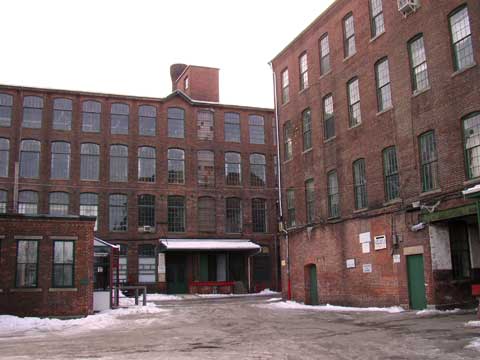
Rising Sun Mills, located down the street from Chris Freed’s building, was rehabed and converted into condos. At the time it was purchased for renovation, there were still several small businesses and artists with spaces in the complex.
During the housing boom earlier this decade, developers began scooping up abandoned or underused factory buildings to convert them into condos. But as I examined in this piece for the public radio show Marketplace, this trend may have been bad for business.
This piece originally aired on Marketplace on February 16, 2005.
You can listen to the piece on Marketplace’s website here.
Adaptive Reuse, Urban Revitalization and Neighborhood Change
An hour-long radio documentary about the renovation of mill buildings in the poorest neighborhoods of the “Renaissance City,” and the subsequent displacement of artists and small businesses. The following audio clip is an excerpt from the introduction of the piece.
There are nearly 250 old mill buildings in Providence, Rhode Island, left over from the city’s days as an industrial powerhouse.
In recent years, renovation and adaptive reuse of the mills has sparked intense debate, revolving around the city’s efforts to revitalize the neighborhoods, and the need for artists’ space in a city and region that promotes the arts. The battle over the city’s mills is a battle about gentrification, about who controls change in a city that’s changing fast.
In the next few years some of the mills will be converted into retail space and condominiums, some will be demolished to make way for new construction, some will be reused by artists, non-profits and small businesses, and some will burn down.
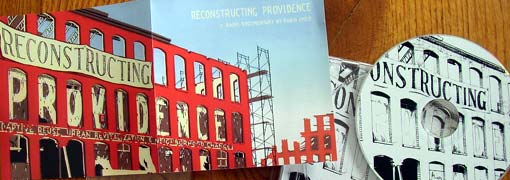
Reconstructing Providence is a documentary about the adaptive reuse of the city’s mill buildings, and all the controversy that’s come with it.
This hour-long story includes interviews with Providence city officials, developers, artists from the now legendary Fort Thunder collective, activists, historic preservationists and city residents. It features an original score for cello and violin by composer Alec K. Redfearn, performed by Margie Wienk and Olivia Geiger.
A live performance version of the piece debuted at AS220, May 10, 2004. Originally aired on WRNI, Rhode Island’s NPR News Station, August 15, 2004. Subsequently aired on WZBC Newton, Mass., and WMPG Portland, Maine.
To buy a CD copy of Reconstructing Providence, featuring original artwork by Ian Cozzens of Secret Door Posters and layout by Jeffery Alexander and Miriam Goldberg of Secret Eye Records, email me.


 Robin Amer
You must be logged in to post a comment.