I’ve just wrapped up a big project for WBEZ about the history of Chicago-style bungalows. There are more than 80,000 bungalows in Chicago, which means they account for nearly one-third of the city’s single-family housing stock. And this year marks the 100th anniversary of the first great wave of bungalow building.
I created virtual tours of three bungalows in different parts of the city. You can see the inside of homes that belong to a Latino firefighter in Jefferson Park, a Polish-American couple in West Ridge and an African-American family in Morgan Park (near Pullman). That last one is especially amazing, I think, because of the owner’s story. Ingrid Sanders is the fourth generation in her family to live in the house! (Her five-year-old son is the fifth!)
I’ll also be on WBEZ’s Afternoon Shift Monday afternoon at 2pm talking about the story and taking calls from homeowners.
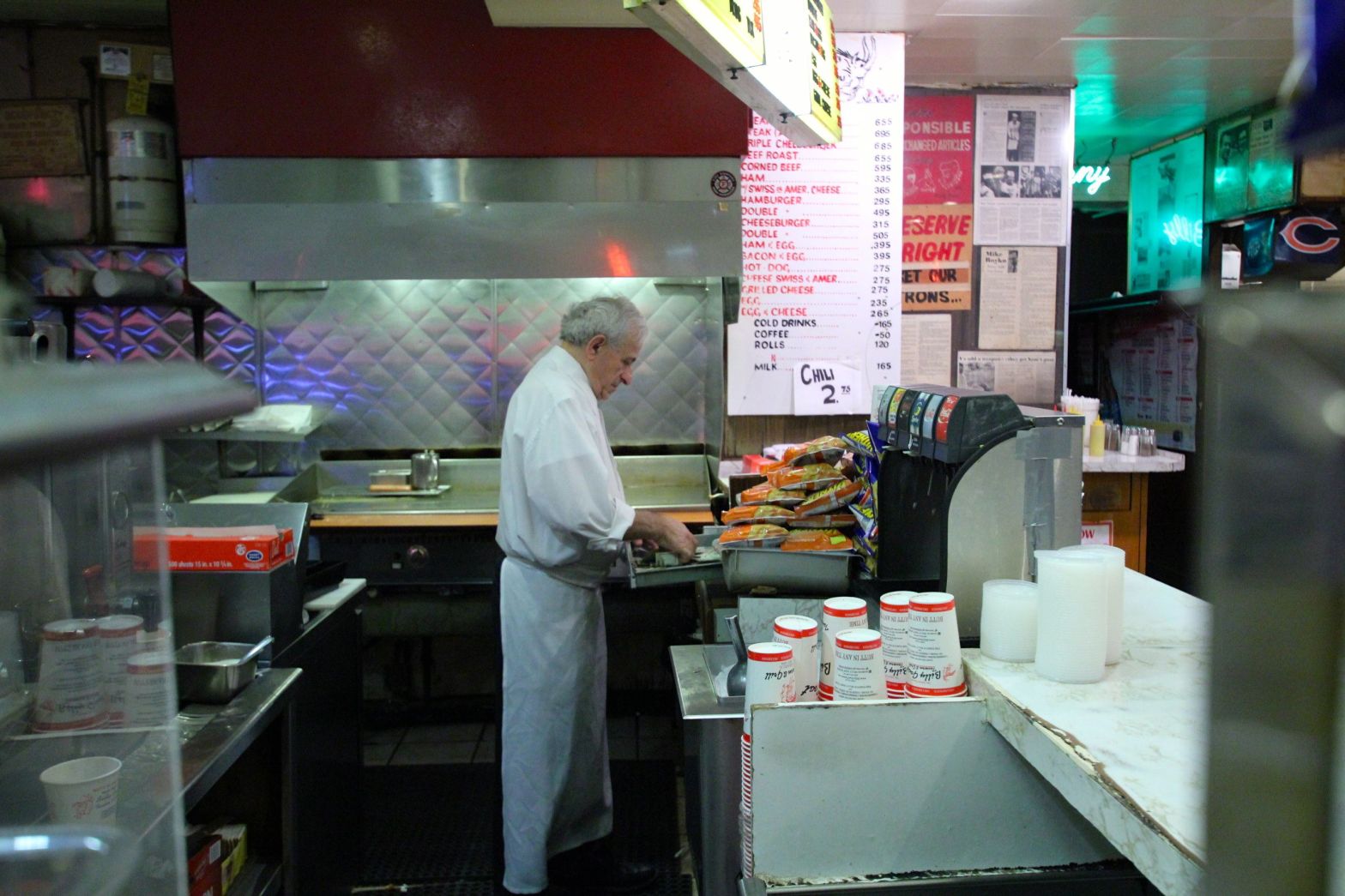
Billy Goat owner Sam Sianis behind the register of his famous tavern. ‘We’re not going to move,’ he said Tuesday. ‘We’re not going to look for another space.’
Back on the home page of WBEZ today with my story about the potential demise of Chicago’s Billy Goat Tavern. Click here to read.
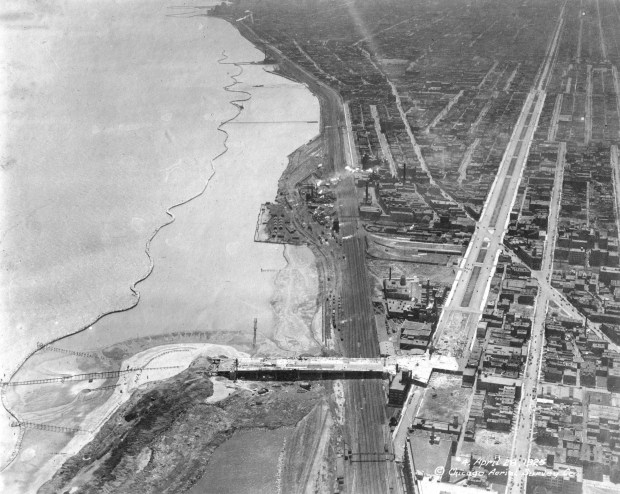
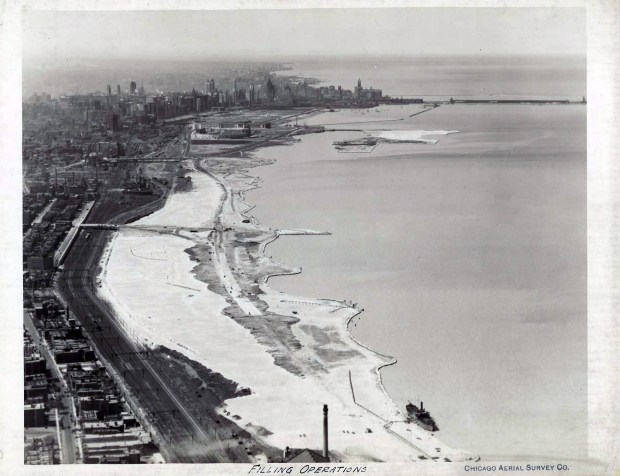
The aerial photo on the left was taken in 1925, facing south over Chicago’s lakefront. The curvy stone breakwater being built into Lake Michigan foreshadows the photo below it, taken just a few years later in 1928. By then, the breakwater had been filled with earth and Chicago had a new lakefront park.
Burnham Park landfill, 1925 (Courtesy of Chicago Park District)Burnham Park landfill, 1928 (Courtesy of Chicago Park District)
This is just one of the surprising ways Chicago’s lakefront has changed over time. Did you know that Grant Park was once a disgusting lagoon filled with dead livestock and other debris? Or that the Gold Coast was once a sandbar filled with brothels and saloons? Or that we once sold the lakefront to a railroad company? Or that Richard J. Daley wanted to build an island in the lake 20-miles long? Chicago history is full of politics, surprises — and a lot of dirt.
I’ve been reporting this subject for WBEZ’s Curious City, and my story is finally out today. Check out the story here, the rest of the incredible photos here and an amazing collection of historic maps provided by The Newberry here. Other than coming away with a much better grasp of Chicago history, and a renewed appreciation for how complicated planning and development always is, one of the best part for me was talking to the Chicago Tribune‘s architecture critic Blair Kamin, and to Lois Wille, who wrote the book Forever Open, Clear and Free. Both Kamin and Wille are Pulitzer Prize winners — and great interviewees.
I’ll also be on the Afternoon Shift with Rick Kogan today at 3:45 p.m. I’ll post the audio later, but tune in if you’re around! Miriam Reuter, the woman whose question spawned the story, will join us as well.
Update 12/13/12: If you missed it, here’s the audio from my appearance on The Afternoon Shift. Editor Shawn Allee described me afterwards as sounding “geeked.” I think he’s right!



 Robin Amer
You must be logged in to post a comment.