The City

The City Podcast - Logo - 1400x1400 - RGB

The City: a long-form investigative podcast about how our cities really work. Forthcoming from the USA TODAY NETWORK in fall 2018.

Read about The City here:

“Making your own shots,” Hot Pod, February 2018

“Q&A with Robin Amer of The City,” Hot Pod, October 2017

“With The City, USA TODAY NETWORK is taking its local-to-national strategy to your earphones,” Poynter, July 2017

“USA TODAY NETWORK hires award-winning reporter Robin Amer to launch new investigative podcast series,” Pod to Pod, June 2017

“WNYC is leading public radio’s transition to podcasting,” Columbia Journalism Review, January 2016

Next stop, the toxic doughnut

On Friday I published my first post for The Chicago Reader. You may have heard by now, but I was recently hired to be the Reader’s Deputy Editor for News. The position was described to me as one of “player/coach.” That means in addition to directing the news coverage for the paper, I’ll continue to report on the beats I’ve covered for more than a decade: urban planning, the built environment, development, real estate, transit, land use etc. Right now my interest is in environmental justice and land use as it’s playing out on Chicago’s Southeast Side. So expect to see more stories in that vein down the line.

I’m still working on my podcast pitch for the WNYC competition. The ONA conference is only a few weeks away! Which explains why I’m working on Labor Day.

The future of petcoke

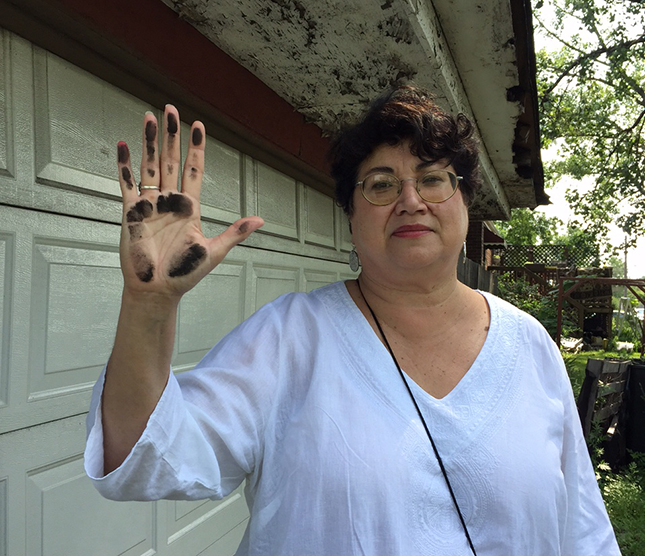
Environmental activist Peggy Salazar holds up a sooty hand after wiping it across a garage across the street from a petcoke storage facility on Chicago's Southeast Side. (Photo by Robin Amer)
Environmental activist Peggy Salazar holds up a sooty hand after wiping it across a garage across the street from a petcoke storage facility on Chicago’s Southeast Side. (Photo by Robin Amer)

I’ve spent much of this summer reporting on Chicago’s Southeast Side for DNAinfo Chicago. The so-called “forgotten 10th Ward” is home to much of what’s left of the city’s heavy industry, so many of the stories I’ve reported have focused on conflicts between industry and the environment.

Case in point: petcoke.

Petcoke is an industrial byproduct that comes from refining oil. It’s produced by the ton, and in Chicago, it largely comes from a BP refinery in Whiting, Ind. There were three petcoke storage facilities on the Southeast Side of the city up until recently. Starting in 2013 environmentalists and Southeast Side residents started pushing for tougher controls on petcoke. The story is still evolving, but as of now, one storage facility has been shuttered, one has been banned from storing petcoke and a third is transitioning to a transfer-only facility.

Here are a few stories I reported this summer. I’ll update the list as I do more.

Chicago bans petcoke from one of two remaining Southeast Side storage sites

Lawmakers want Feds to do petcoke impact study

“No one talked about the f***ing Cubs curse here in the ’70s.”

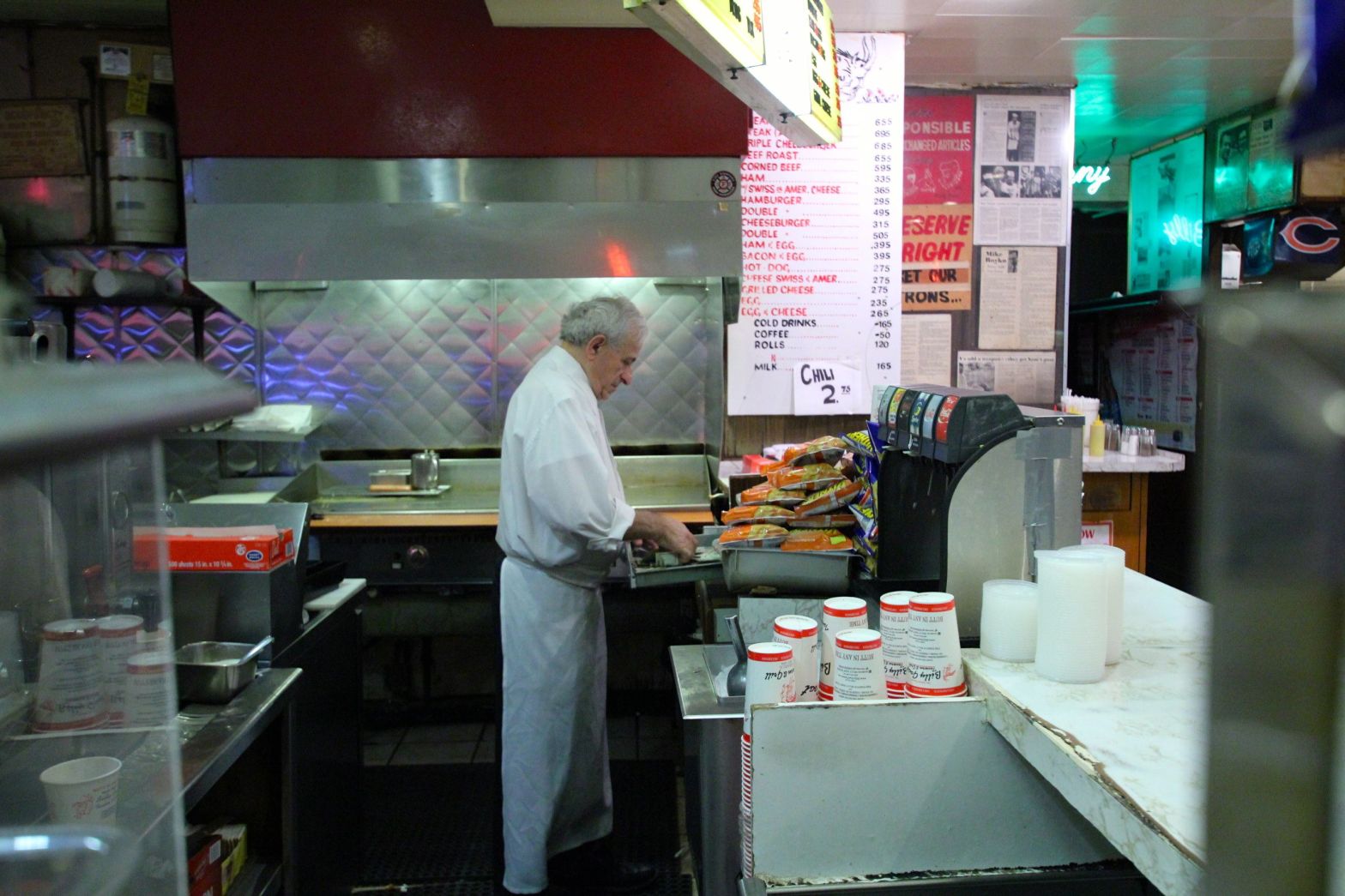
Billy Goat owner Sam Sianis behind the register of his famous tavern. ‘We’re not going to move,’ he said Tuesday. ‘We’re not going to look for another space.’

Back on the home page of WBEZ today with my story about the potential demise of Chicago’s Billy Goat Tavern. Click here to read.

‘Big Pants’ wins big prize from Tall Buildings council

BY ROBIN AMER

Beijing locals know the building that houses China’s state-run television station by its affectionate nickname: “Big Pants.” From certain angles, the skyscraper resembles a pair of shiny silver trousers straddling the capital city.

Architecture fans the world over recognize the structure, too. The building, properly known as CCTV Headquarters, and its architect, the maverick Dutchman Rem Koolhaas, took home top honors Thursday night from the Chicago-based Council on Tall Buildings and Urban Habitat.

In awarding its annual prize for “Best Tall Building Worldwide,” the council said that Koolhaas’ creation had “singlehandedly paved the way from the height-obsessed, set-back skyscraper of the past to the sculptural and spatial skyscraper of the present.”

The 768-foot-tall building became an instant icon when it was completed in 2012.

CCTV had to stand out, Koolhaas told an audience of nearly 600 council delegates Thursday, because Beijing’s ongoing building boom could mean an excess of 300 skyscrapers in the next few decades.

“It didn’t make sense to do a needle or to go for height,” Koolhaas said.

Instead, he and his team at the Rotterdam-based Office for Metropolitan Architecture created an unpredictable geometric loop that shifts at every angle. From some vantage points it looks like a sleek glass “Z.” From others, it resembles a towering, angular Mobius strip.

Koolhaas said the building’s most well known view was his least favorite, and that the structure’s unpredictability was its greatest achievement.

“Its versatility is its most modern contribution to Beijing,” he said.

Koolhaas won the Pritzker Architecture Prize, sometimes called architecture’s Nobel Prize, in 2000. His other buildings include Seattle’s Central Library, Portugal’s Casa da Musica concert hall and the McCormick Tribune Campus Center at the Illinois Institute of Technology.

CCTV beat out three other noteworthy skyscrapers Thursday to win. Each had earned council honors for its respective geographic region:

At 1004 feet and 73 stories, the Shard in London is now Europe’s tallest building, collapsing 30 acres of space into a single acre of land. It took Italian architect Renzo Piano, who also designed the Modern Wing of the Art Institute of Chicago, and British developer Irvine Sellar to devise a building that Sellar said would help stop the previously anti-tall building city “from becoming a museum.”

The Bow in Calgary was so named for its shape, which is something akin to a cross-section of celery stalk. British architects Foster + Partners clustered core uses in the center and surrounded each floor with small offices, giving cubicle-dwellers access to a stunning view of the Rocky Mountains.

Sowwah Square, the home of Abu Dhabi’s regional securities exchange, features climate control measures like a double-paned exterior glass wall that helps cool and recirculate air, and blinds that raise and lower automatically depending on the time of day and the angle of the sun, to manage temperatures that can be in excess of 115 degrees.

“I thought [making the decision] would be pretty straightforward, and it was not at all,” council executive director Anthony Wood said in a statement Friday. “It went through four rounds of voting before we decided on the winner.” 

The Council on Tall Buildings is the world’s arbiter of official skyscraper height, and also conducts research on sustainable building practices.

The group also gave awards Thursday for innovation and lifetime achievement.

Innovation awards went to Kone Corp., a Finnish company that created a super strong, lightweight carbon-fiber rope they hope will replace traditional steel cables in high-rise elevators, and the BROAD Group, a Chinese company that has developed a modular building system that enables construction workers to snap one pre-fabricated piece into the next, almost like Legos.

Henry Cobb, a founding partner along with I.M. Pei of the international architecture firm Pei Cobb Freed & Partners, took home one of two lifetime achievement awards. The other went to Chicago geotechnical engineer Clyde N. Baker Jr., who had a hand in designing the foundations of seven of the world’s 16 tallest buildings.

Baker, who retired from the Chicago offices of AECOM in July, discussed his work on the foundations of buildings ranging from the Petronas Twin Towers in Kuala Lumpur to the never-built Chicago Spire.

“It’s ready for a building, if someone comes up with the money,” Baker said Thursday.

The Council on Tall Buildings holds its next Chicago event, a symposium on the future of cities, Feb. 14-17 at IIT.

Follow Robin on Twitter @rsamer.

Landmarks Illinois urges alderman to halt proposed demolition of Lincoln Park building

Image

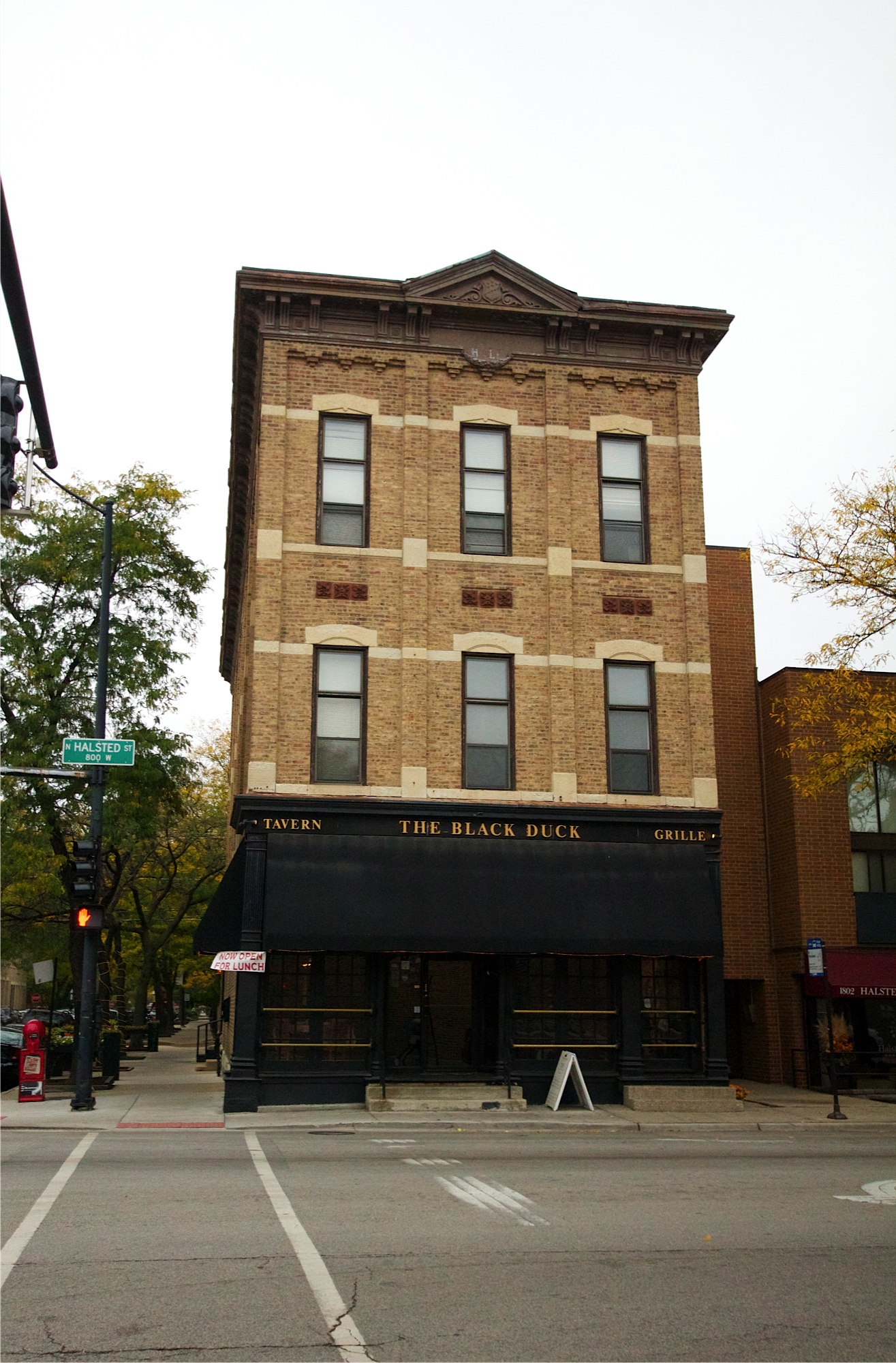
Preservationists urged 43rd Ward Alderman Michele Smith Thursday to stay the demolition of 1800 N. Halsted St. (Photo by Robin Amer)

BY ROBIN AMER

CHICAGO — Preservationists weighed in on the proposed demolition of an architecturally significant building in Lincoln Park Thursday, asking city officials and developers not to tear it down.

In a letter, Landmarks Illinois urged to 43rd Ward Ald. Michele Smith to halt the tear-down of 1800 N. Halsted St. as part of a mixed-use development project planned around the intersection of Halsted and Willow streets.

“This 1800s commercial building has a high degree of architectural quality and integrity and we are very concerned about its proposed demolition,” Lisa DiChiera, Landmarks Illinois’ director of advocacy wrote. “We hope the developer will be urged to strongly consider alternative designs that incorporate the historic building.”

The architect of the three-story brick building is unknown. Still, DiChiera said the building is a strong example of Chicago’s 19th century vernacular architecture. The building is cited in Chicago’s Historic Resources Survey, which tracks architecturally significant buildings constructed prior to 1939.

Buildings coded “red” have what DiChiera called “a high level of architecture integrity.” 1800 N. Halsted St. is coded “orange,” the second highest rating. After permits are filed, buildings coded red and orange automatically trigger a 90-day wait period before demolition can begin.

“I always look at a building like this and think, this is not a throwaway building,” DiChiera said Thursday. “It has its cornice; the retail level is not mucked up. It’s a really nice building.”

The demolition of 1800 N. Halsted St. would make way for a new mixed-use multi-story residential building on the site, as well as new retail along Halsted Street and new town homes along Willow Street, according to information posted on the 43rd Ward’s website.

The project was proposed by Chicago-based real estate company Golub & Co., which is best-known for developing and managing high-end high rises like 22 W. Washington St.

Golub purchased 1800 N. Halsted St. and 10 other buildings along the 1700 and 1800 blocks of Dayton and Halsted streets in March of 2012. The company’s head of development initiatives did not return calls for comment Friday.

Deirdre Graziano sits on the zoning committee of the Lincoln Central Association and serves as the community group’s vice president. She has lived and owned property in Lincoln Park since 1968, and said Friday that the neighborhood has lost many orange-rated historic buildings during her time there.

“When a building is orange-rated, it does not mean it’s insignificant,” Graziano said. “There are some buildings that should be torn down. There’s no question about it. But so many of the buildings in this area are, in many ways, gems that are irreplaceable.”

Some Lincoln Park residents have expressed concern that projects like the one proposed at Halsted and Willow would alter the neighborhood’s character. These residents fear new development that replaces older brick buildings with the kind of large commercial buildings that line the busy retail corridor along North and Clybourn avenues.

Diane Levin chairs the planning committee for the RANCH Triangle Community Conservation Association, which is active in the portion of Lincoln Park bordered by Racine and Armitage avenues, the Chicago River and Halsted Street. “RANCH Triangle believes this is about more than just one building,” Levin said Friday. “It’s about the quality of life and the overall aesthetic of the greater community, which is very different from what one gets at North and Clybourn.”

RANCH Triangle co-hosted a community meeting with Ald. Smith Sept. 30 to discuss the project with Golub executives and 43rd Ward residents. Smith declined to comment Friday, but told Crain’s in advance of the September meeting that, “the community is going to have a lot of say about this.”

Landmarks Illinois’ DiChiera said it might be possible to extend the boundaries of the nearby Sheffield Historic District, which is listed on the National Register of HIstoric Places, to include 1800 N. Halsted St. If such an extension were possible, Golub could be eligible for federal tax incentives meant to encourage the adaptive reuse of historic buildings. Such tax credits, DiChiera said, could make it more financially feasible for the developer to keep the building in place.

“All of these options should be studied,” DiChiera said.

Follow Robin on Twitter @rsamer. 
Flying

36:39

This episode of Inside Out originally aired in the spring of 2002.

In this episode we explore three people past and present for whom flying retains some of the wonder and sublime associated with the original generation of pioneers, eccentrics and visionaries included among the first fliers.

Robin Amer and Megan Hall profile a man so desperate to fly he built his own airplane from scratch.

Anna Goldman explores a lesser known work by France’s beloved aviator/mystic/author, Antoine de Saint-Exupery.

Rachel Katzman on the lone kite flier.

Hosted by Gabriel Wildau with Executive Producer Robin Amer. Contributors include Rachel Terp, Owen David, Jenny Asarnow and Adam Florin. Oversight by Beth Taylor.

National Debt

20:30

When we talk about debt, we often mean a kind of personal debt that comes from borrowing money and paying it back. But there’s another kind of debt – when someone has wronged you big time, and now they owe it to you to make it up somehow. The U.S. government is no stranger to this kind of debt, or this kind of big wrong. There was slavery. And what happened to the Native Americans. And then there was what happened during World War II.

After the Japanese attacked Pearl Harbor on December 7, 1941, the U.S. rounded up 120,000 people of Japanese decent and put them in internment camps. Nearly two-thirds of them were American citizens. Years later the U.S. government would apologize and pay reparations to people who had been held in the camps, but it took decades to make that happen.

In this story, Chiye Tomihiro and Sam Ozaki, two survivors of internment, describe how they went from being seen as model citizens to being seen as the enemy, and how they fought to get what was owed to them after the country admitted its mistake.  They tackle the question: how do you pay someone back when what’s been taken away is their  basic human dignity?

This piece was produced as a collaboration between Robin Amer and Jesse Seay, and narrated by Jesse.

Reconstructing Providence Featured on the Etsy Blog

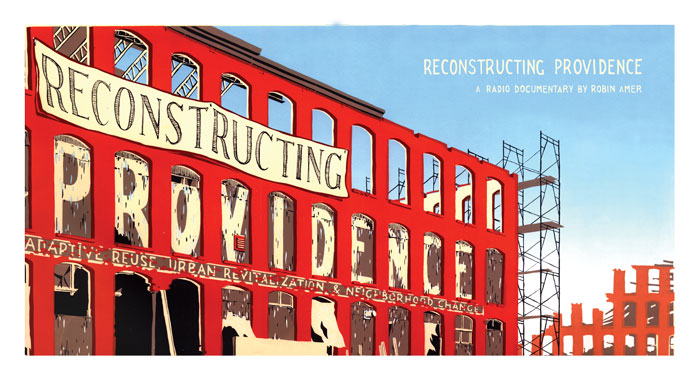
My friend Xander Marro, co-founder of the Dirt Palace and Managing Director of AS220, guest curated a selection of her favorite hand-made offerings from Etsy on the site’s Storque blog today.  She was kind enough to include the CD of my documentary Reconstructing Providence among her selections. Thanks Xander! And welcome to anyone who found their way here from Etsy.

If you haven’t checked out Etsy, it’s an amazing site filled with enticing hand-made goodies from what’s probably now hundreds of thousands of artists from around the world. I bought my coffee table there, a felt molskine pouch, and half a dozen other objects I’m pretty attached to. My favorite seller at the moment is OctopusME, who casts silver jewlery from real octopus tentacles.

While you’re there you should also check out the work selected by my other Providence-expat friends Luke Fischbeck and Sarah Anderson of Lucky Dragons, Sumi Ink Club and other projects. I really like both of them and the work they produce together, which is often (as another friend of ours put it) kind of like this magical artistic metaphor for their relationship.  I haven’t been in touch with them as much as I would like…I missed their Chicago show last spring and wasn’t able to look them up when I was in LA this past December.  Hopefully it won’t be too long before I have another opportunity to see them, one I’ll actually take up.

If you fish around my site, you’ll notice that I featured Luke’s work in a couple different episodes of No Soap Radio.  He also helped me build a Max/Msp player I used when I first performed RP in 2004, which I’m still grateful for.

Inside Out: Names

Originally broadcast Thursday Oct. 3, 2003. Full listing of Inside Out episodes here.

What’s in a name? In this episode we think about the this word (or words) that precede us everywhere we go. Hosted by Adeline Goss, with executive producer Anna Goldman. Contributors to this show include Robin Amer, Ali Budner, Anna Goldman, and Jenny Asarnow. Thanks to Beth Taylor.

In this episode:

Anna Goldman interviews her friend Mojo (yes, that’s his real name) about just what his parents were thinking, and how he deals with peoples’ expectations of him based on his name.

Robin Amer talks to Sarah McDermott about how she got her very much trademarked corporate nickname.

Ali Budner talks to Luke Woodward about what it was like to change his name when he transitioned.

Jenny Asarnow talks to Rebecca Subar about taking a name, and then leaving it behind.

Then, Ali’s twin sister Brooke Budner tells her about the time she convinced a group of strangers she was someone else all together.